
What you eat, when you eat and how much water you drink all affect how you feel, not just how your body works. Your brain is an organ, and it needs steady fuel, good building blocks and enough fluid to do its job. Research on diet and mental health has grown a lot in recent years, and the message is encouraging: small, steady changes at the table can help your mood, your energy, your sleep and how well your medicine works. This growing field is called nutritional psychiatry.
Food is not a stand-alone treatment for depression, anxiety, or any other condition, and it does not replace medication or therapy. What it can do is add to them and make your care plan more holistic. When done properly, a good diet can support your recovery and may help shorten it. Diet is also one of the few things you can control every single day, and over the long run, eating well can act as a protective factor that helps prevent problems. That is why dietary education is part of our lifestyle counseling and nutritional services at Greater Heights Holistic Psychiatry. Here in Houston, our dietary education and counseling can also include micronutrient testing and supplement guidance, sometimes called nutrient therapy or supplement therapy.
Does diet really make a difference to mental health?
Study after study from different countries points the same way: people who eat more fruits, vegetables, beans, whole grains, fish and nuts tend to have lower rates of depression and anxiety. People who eat a lot of processed food and sugar tend to have higher rates. A major expert review in European Neuropsychopharmacology confirmed that diet strongly influences mental health. Any balanced diet is good, but the traditional Mediterranean style of eating has the most direct evidence behind it (ECNP review).
One of the best-known tests is the SMILES trial in Australia. Adults with moderate to severe depression were given dietitian support to move toward a Mediterranean-style diet, while a comparison group got friendly social support. After 12 weeks, the diet group had greater improvement in depression symptoms, and 32% reached remission, compared with 8% in the comparison group. It was a small study of 67 adults, and most were also getting their usual treatment, so diet worked as a helper alongside care (BMC Medicine, 2017).
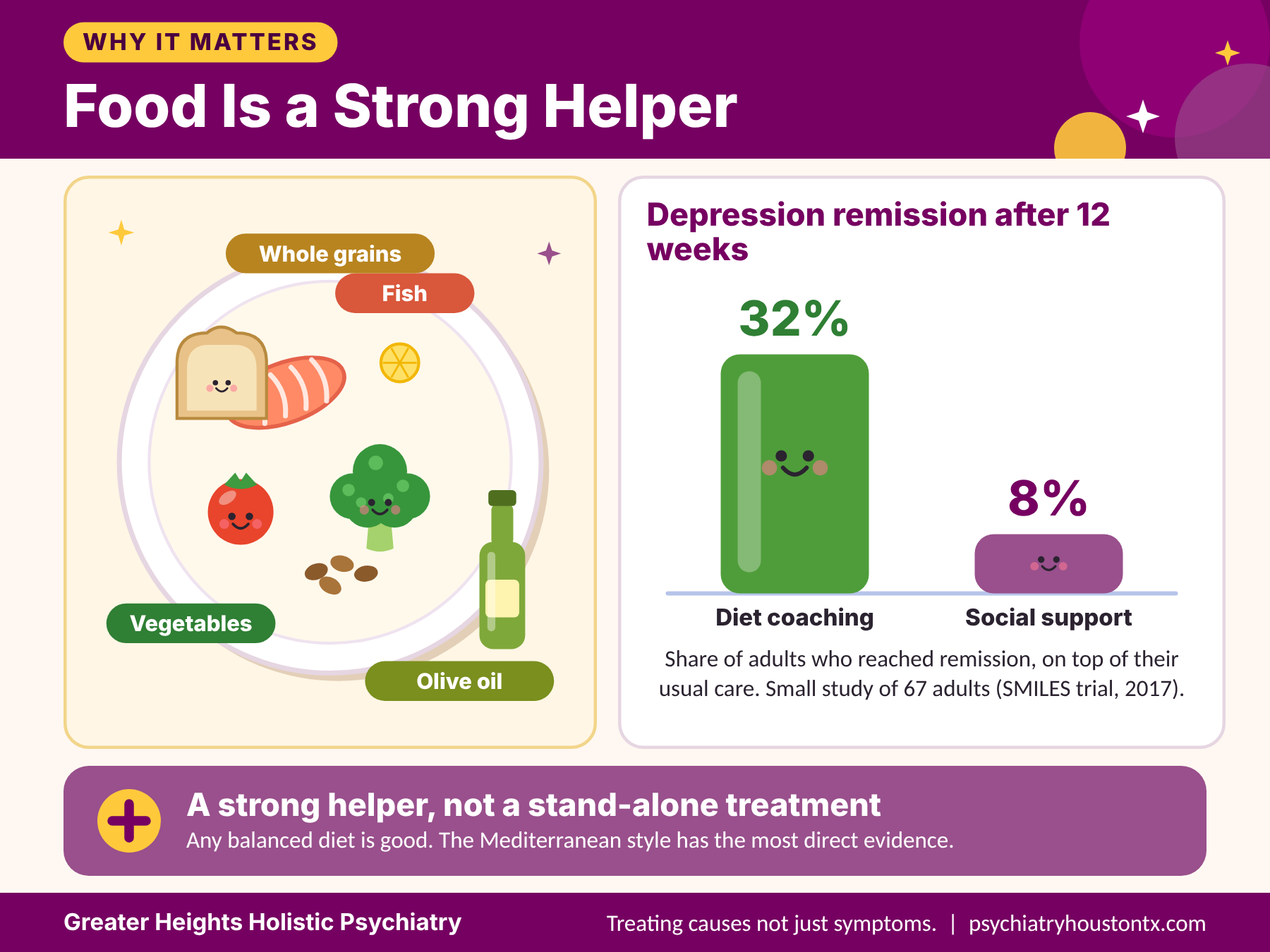
Our grandparents knew this long before the research caught up: real, balanced food keeps the whole person healthier. Scientific studies have also shown a link between a balanced diet and overall health. If you are someone who trusts only research findings, then think of diet as a strong helper that adds to your overall recovery and helps prevent mental health conditions.
Why does food affect your mood?
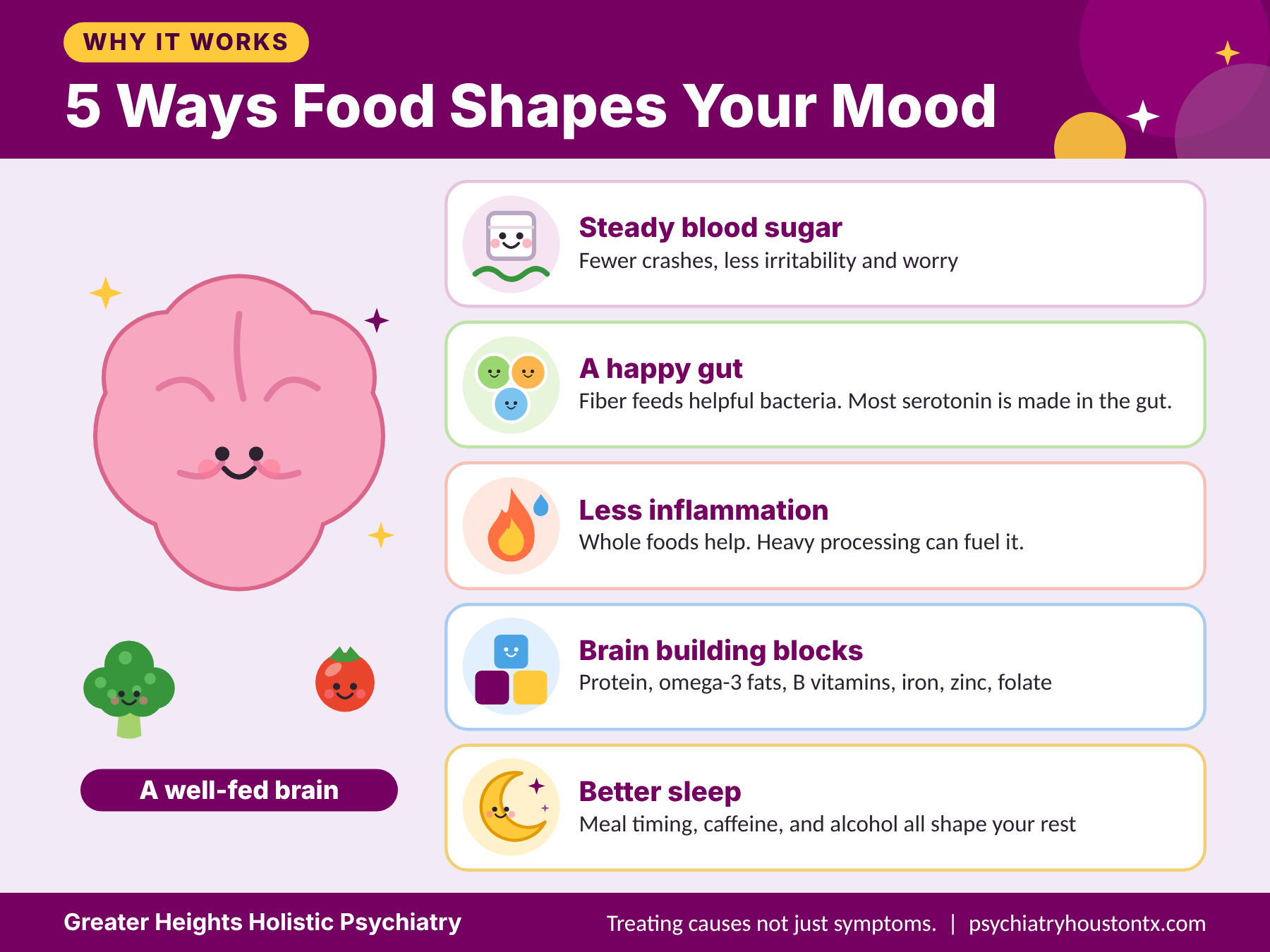
- Steady blood sugar. Sugary snacks and drinks cause quick spikes and crashes. These can feel like irritability, shakiness, worry and poor focus.
- The gut-brain connection. Your gut and brain talk to each other all day. Fiber-rich foods feed the "good" gut bacteria that help regulate mood. About 90% of your body's serotonin is made in the gut. Gut serotonin does not travel straight to the brain, but the gut sends signals to the brain that affect mood (Nutrients, 2016).
- Less inflammation. Heavily processed foods are linked to more inflammation in the body, which is also seen in depression.
- Building blocks. Your brain makes its chemicals from nutrients in food, such as protein, omega-3 fats, B vitamins, iron, zinc and folate.
- Better sleep. What and when you eat, plus caffeine and alcohol, all affect sleep. Poor sleep makes almost every mental health condition worse.
What to eat and what to skip for mental health: rules that stick
You already know soda and candy are not helping. These rules are less obvious, and easier to remember at the grocery store.
Eat more of these
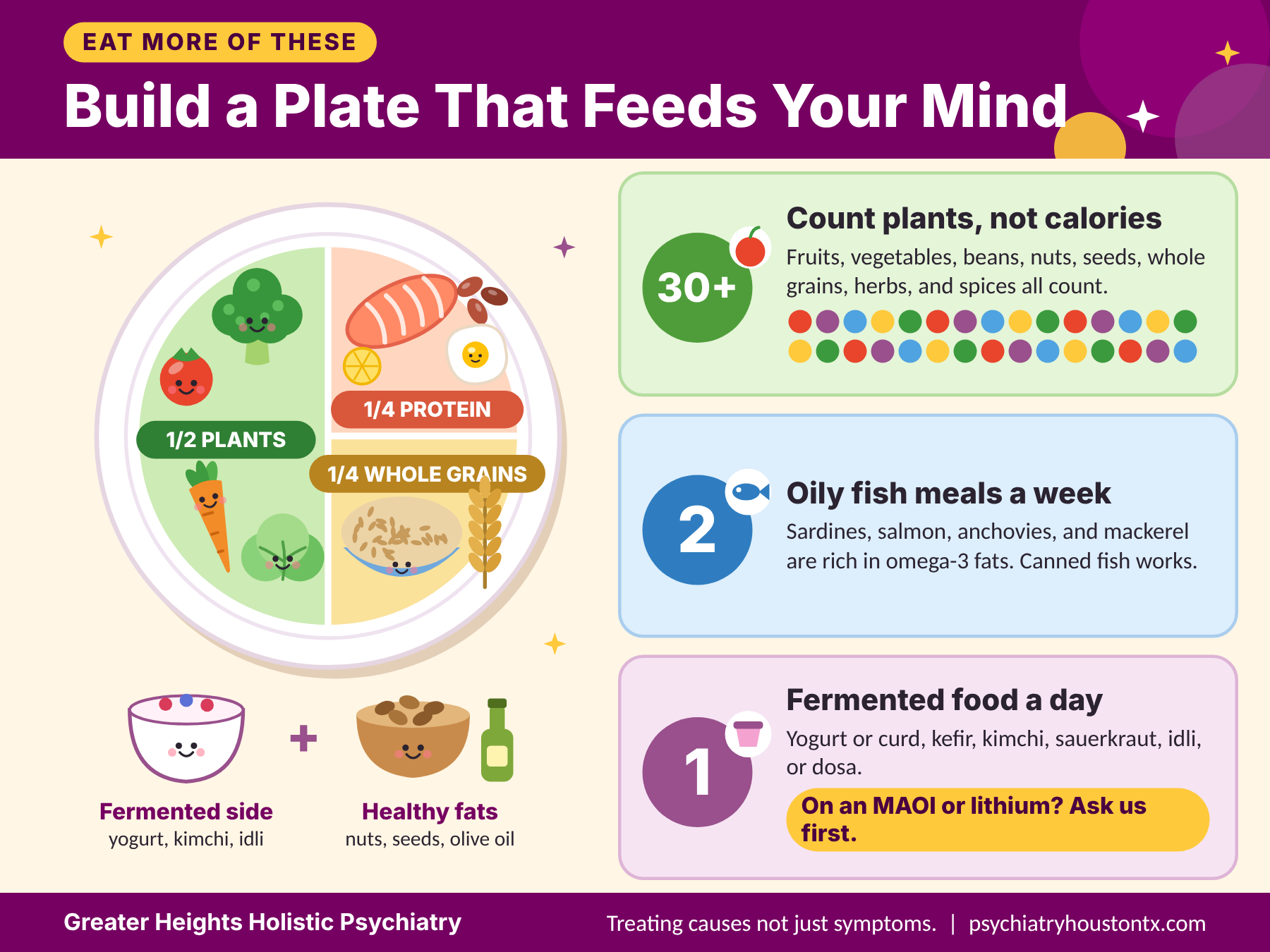
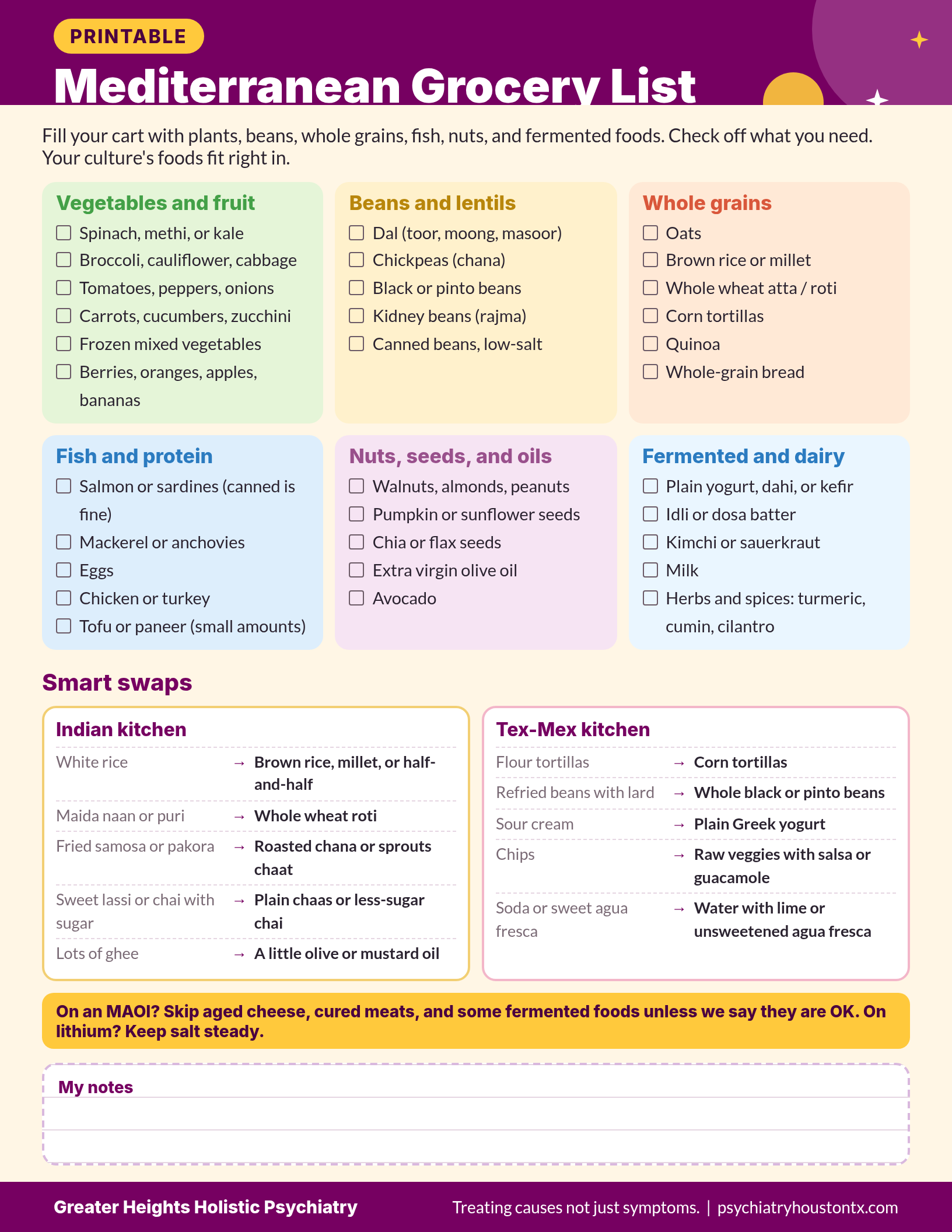
1. Count plants, not calories. In the American Gut Project, people who ate more than 30 different plant foods a week had more diverse gut bacteria than people who ate 10 or fewer (mSystems, 2018). This was an observational study, so it shows a link, not proof. Fruits, vegetables, beans, lentils, nuts, seeds, and whole grains all count. Try this: add one new plant to every meal, and count herbs and spices too.
2. Add one fermented food a day. In a Stanford trial, 36 healthy adults followed a 10-week diet with either fermented foods or high-fiber foods. Yogurt, kefir, kimchi, fermented vegetables, and kombucha increased gut bacteria diversity and lowered 19 inflammatory proteins. The high-fiber group did not see those drops (Cell, 2021). Try this: yogurt or curd at breakfast, kimchi or sauerkraut with dinner, or idli and dosa. If you take an MAOI medicine or lithium, ask us first, because aged and fermented foods can be high in tyramine or salt.
3. Eat oily fish twice a week. Sardines, salmon, anchovies, and mackerel have the most omega-3 fats. Walnuts and chia seeds are plant sources. Try this: canned sardines and canned salmon are cheap and easy.
4. Put a handful of nuts or seeds on your plate. They supply magnesium, zinc, and healthy fats. Try this: pumpkin seeds on salad, almonds with fruit, or walnuts in oatmeal.
5. Go dark and leafy. Dark green leafy vegetables, beans, and whole grains are rich in folate and other B vitamins, which your brain uses to make its chemicals. Try this: spinach, methi, or kale in eggs, dal, and soups.
6. Build every plate with protein, fiber, and a healthy fat. An egg with vegetables and olive oil is a better start than a plain bagel. This combination keeps blood sugar steadier, which helps mood and focus.
Skip or limit these
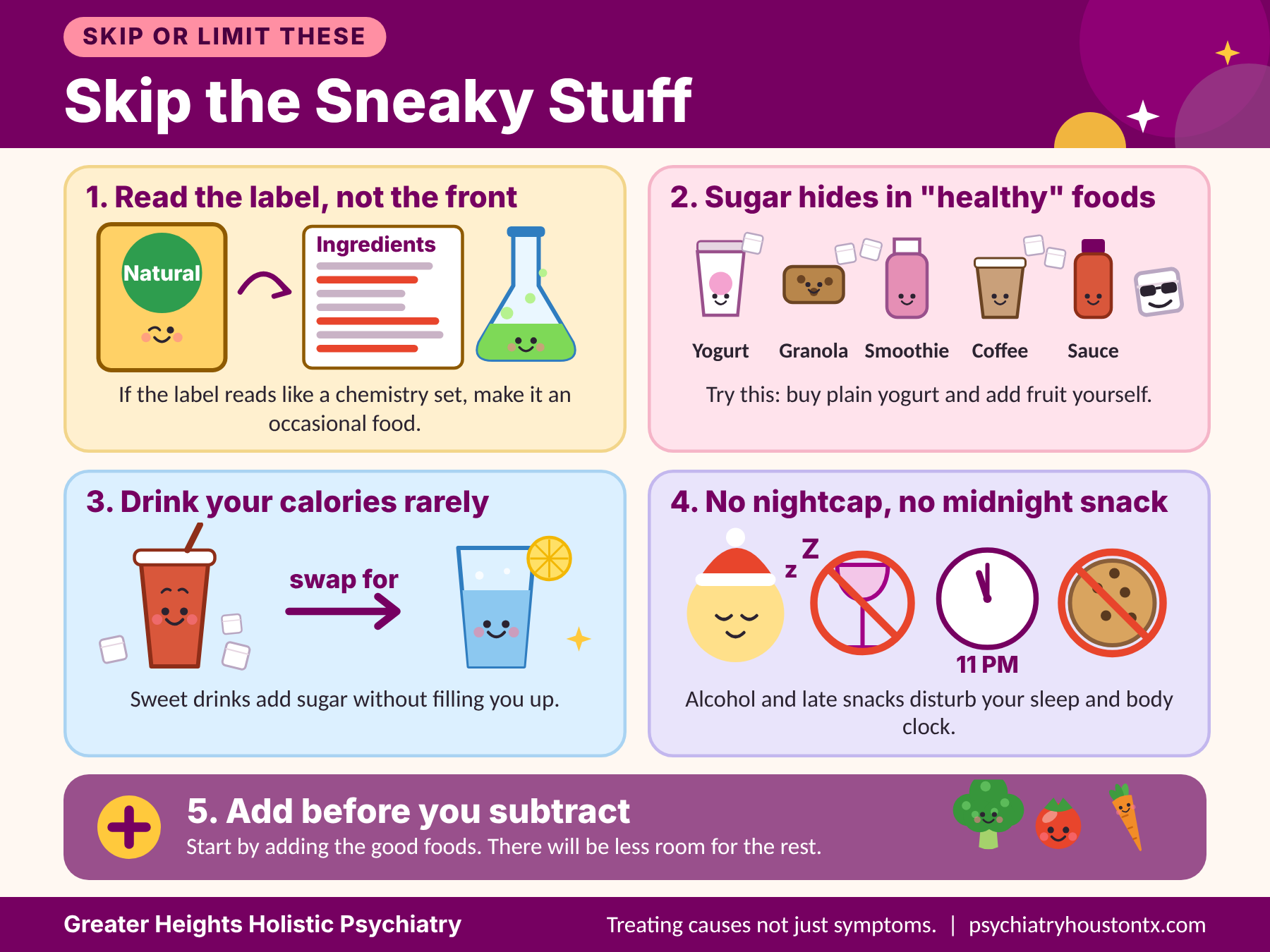
1. Read the label, not the front of the box. Ultra-processed foods usually have five or more ingredients, including additives that are rarely used in home kitchens. A review of studies that followed people over time found that eating more of them was linked to a higher risk of later depression (Nutrients, 2022). A rule that sticks: if the label reads like a chemistry set, make it an occasional food, not a daily one.
2. Watch for sugar in "healthy" foods. Flavored yogurt, granola, protein bars, bottled smoothies, flavored coffee drinks, and sauces can carry as much sugar as dessert. Try this: buy plain yogurt and add fruit yourself.
3. Drink your calories rarely. Sweet drinks give you sugar without filling you up. Make water, plain tea, and sparkling water your default.
4. Skip the nightcap and the midnight snack. Alcohol worsens sleep and can work against many psychiatric medicines. Late-night eating also disturbs your body clock, which we cover in the meal timing section below.
5. Add before you subtract. Do not start by banning foods. Start by adding the foods above, and there will be less room for the rest.
Also keep fast food, fried food, and processed meats such as hot dogs and sausage to a minimum, and avoid caffeine after noon.
Most of this research shows links, not proof. Experts note that we cannot yet name particular foods as treatments for mental disorders, so think of these as habits that support your care.
Do serotonin-rich foods help your mood?
You may have heard of "serotonin foods." Serotonin is made from an amino acid called tryptophan, which your body cannot make on its own. You must get it from food. Good sources include eggs, salmon, turkey, cheese, tofu, nuts, seeds and oats.
Here is the honest part. Eating these foods will not act like a medication, and one meal will not change your mood. But when eaten day after day, they may help support your recovery. They may also help protect against low mood coming back when you keep up the habit over the long term. Studies have shown that a diet too low in tryptophan can lower serotonin, so these foods are a helpful part of the big picture.
Foods rich in tryptophan, the building block of serotonin
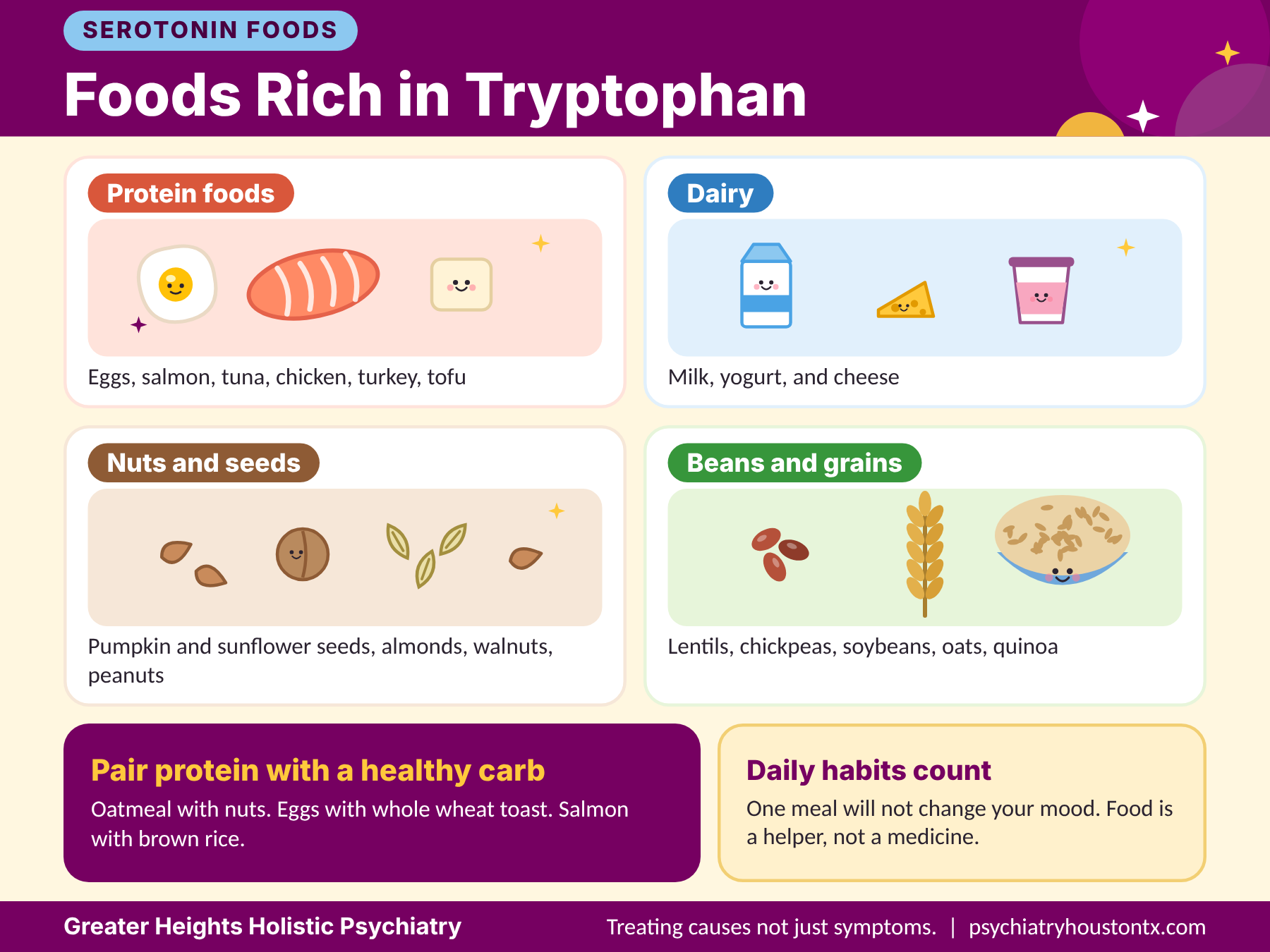
- Protein foods: eggs, salmon, tuna, chicken, turkey, and tofu
- Dairy: milk, yogurt, and cheese
- Nuts and seeds: pumpkin seeds, sunflower seeds, almonds, walnuts, and peanuts
- Beans and grains: lentils, chickpeas, soybeans, oats, and quinoa
How to get the most from them
- Eat them every day, not once in a while. Small steady habits matter more than one "perfect" meal.
- Pair protein with a healthy carbohydrate. Carbs help tryptophan reach your brain, because they move competing amino acids out of its way (Healthline).
- Think in combinations.
- Oatmeal with nuts or seeds
- Eggs with whole wheat toast
- Salmon with brown rice
- Chicken or tofu with quinoa or a whole-grain wrap
Want a handy list? We can send you our handout listing serotonin-rich foods. Please give us your email address, or ask for your copy at your next visit to the clinic.
Water and mental health: how much should you drink?
Your brain is mostly water, and it is one of the first places you feel a shortage. Here is what the research shows:
- Mood in 3 days. In a small study of 52 adults, people who normally drank little water (less than about 5 cups a day) raised their intake to about 10 cups. They felt less tired and less confused. People who normally drank a lot and cut back to about 4 cups felt less calm, less content, and less positive (PLoS ONE, 2014).
- Losing only a little water. When young women lost about 1 to 2% of their body water, they had more headaches and fatigue, found tasks harder, and felt worse (Journal of Nutrition, 2012).
- Depression. In a study of more than 3,300 adults, 36% of people who drank fewer than 2 glasses of plain water a day were depressed, compared with 22% of those who drank 5 or more. After other factors were taken into account, low water intake was still linked to depression, but not clearly to anxiety (World Journal of Psychiatry, 2018). This study only shows a link. People who feel low may also drink less, or may reach for sweet drinks instead.
How much do you need? It depends mostly on your size. Clinical references put an adult's fluid needs at about 30 to 40 mL for every kilogram of body weight (clinical nutrition reference). Here is an easy way to use that:
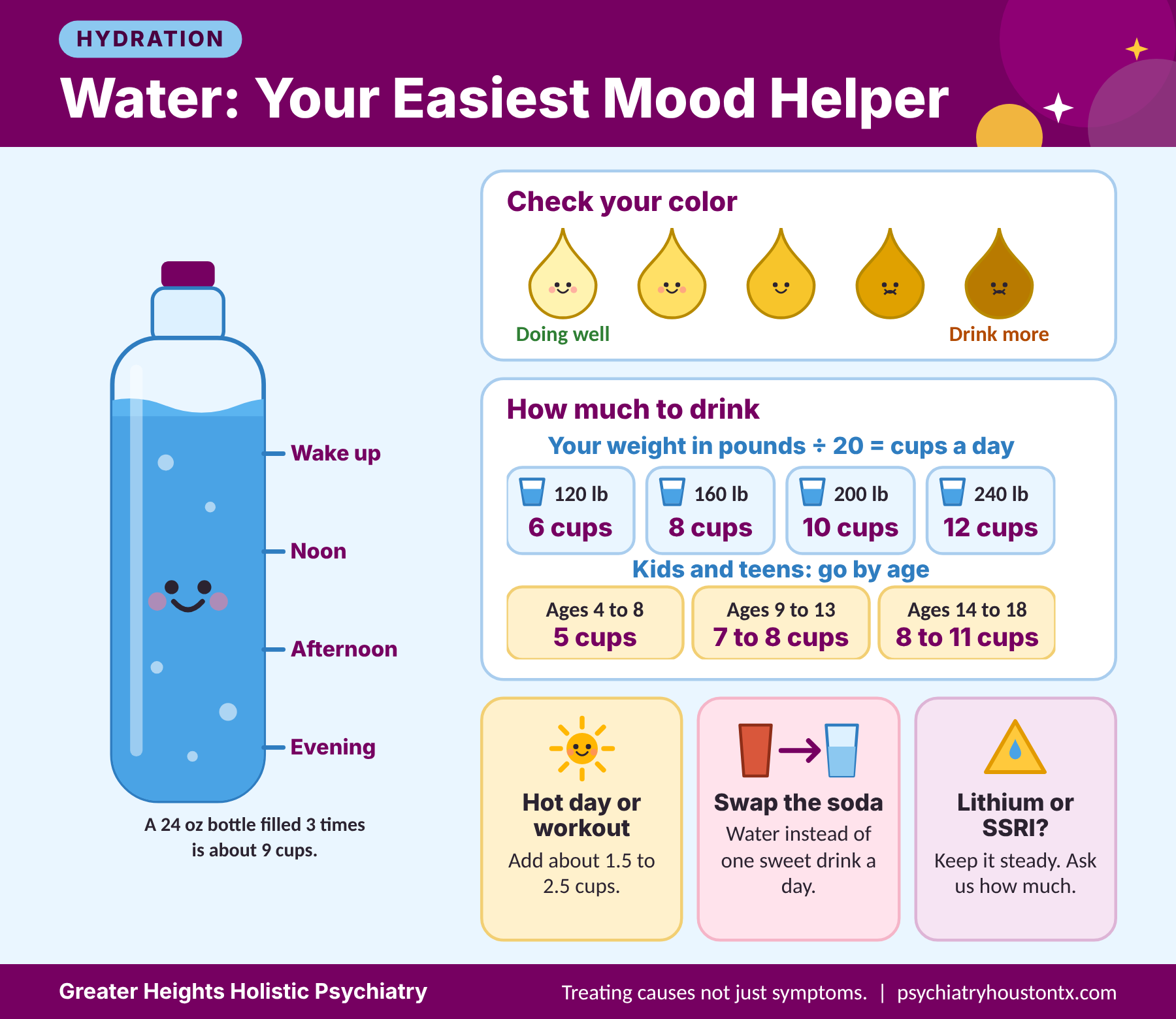
Your weight in pounds ÷ 20 = cups of drinks a day.
| Your weight | Cups of drinks a day |
|---|---|
| 100 pounds | about 5 |
| 120 pounds | about 6 |
| 140 pounds | about 7 |
| 160 pounds | about 8 |
| 180 pounds | about 9 |
| 200 pounds | about 10 |
| 220 pounds | about 11 |
| 240 pounds | about 12 |
Count all drinks, including coffee, tea, and milk. Food supplies about 20% of your water on top of this (National Academies). Treat the number as a starting point. If it comes out higher than about 12 cups, ask us first. For children and teens, needs follow age and activity: about 5 cups for ages 4 to 8, 7 to 8 cups for ages 9 to 13, and 8 to 11 cups for ages 14 to 18 (National Academies guide).
Most healthy people can let thirst guide them. Drink more when it is hot, like in the Houston summer, and on days you exercise (add about 1.5 to 2.5 cups).
Make it easy:
- Start with a glass when you wake up, before coffee.
- Use a 24-ounce bottle and fill it 3 times a day. That is about 9 cups.
- Tie water to habits: a glass with each meal, with each dose of medicine, and after brushing your teeth.
- Check your color. Pale yellow urine means you are doing well. Dark yellow means drink more.
- Swap one soda a day for water, sparkling water, or plain tea. Flavor it with lemon, cucumber, or berries.
- Eat your water: soups, melon, cucumbers, and oranges all count.
- Slow down 1 to 2 hours before bed so you are not up all night.
When more is not better:
- Lithium. Dehydration can push your lithium level too high. Keep your fluids and salt steady, drink extra in the heat, and call us if you have vomiting, diarrhea, or cannot keep fluids down.
- Antidepressants (SSRIs and SNRIs). These can lower the body's sodium, especially in older adults, women, people with a small build, and people on water pills (Annals of Pharmacotherapy, 2006). Do not force large amounts of water. Call us if you get a headache, nausea, confusion, or weakness after drinking a lot.
- Kidney or heart problems. Ask us how much is right for you.
Meal timing and intermittent fasting: is it safe for mental health?
When you eat matters too.
Regular meals are a good place to start. Eating at about the same times each day keeps blood sugar steadier, supports sleep and gives your body a routine. Skipping meals and then overeating late at night can make mood and energy swing.
Intermittent fasting: give your body a break from eating
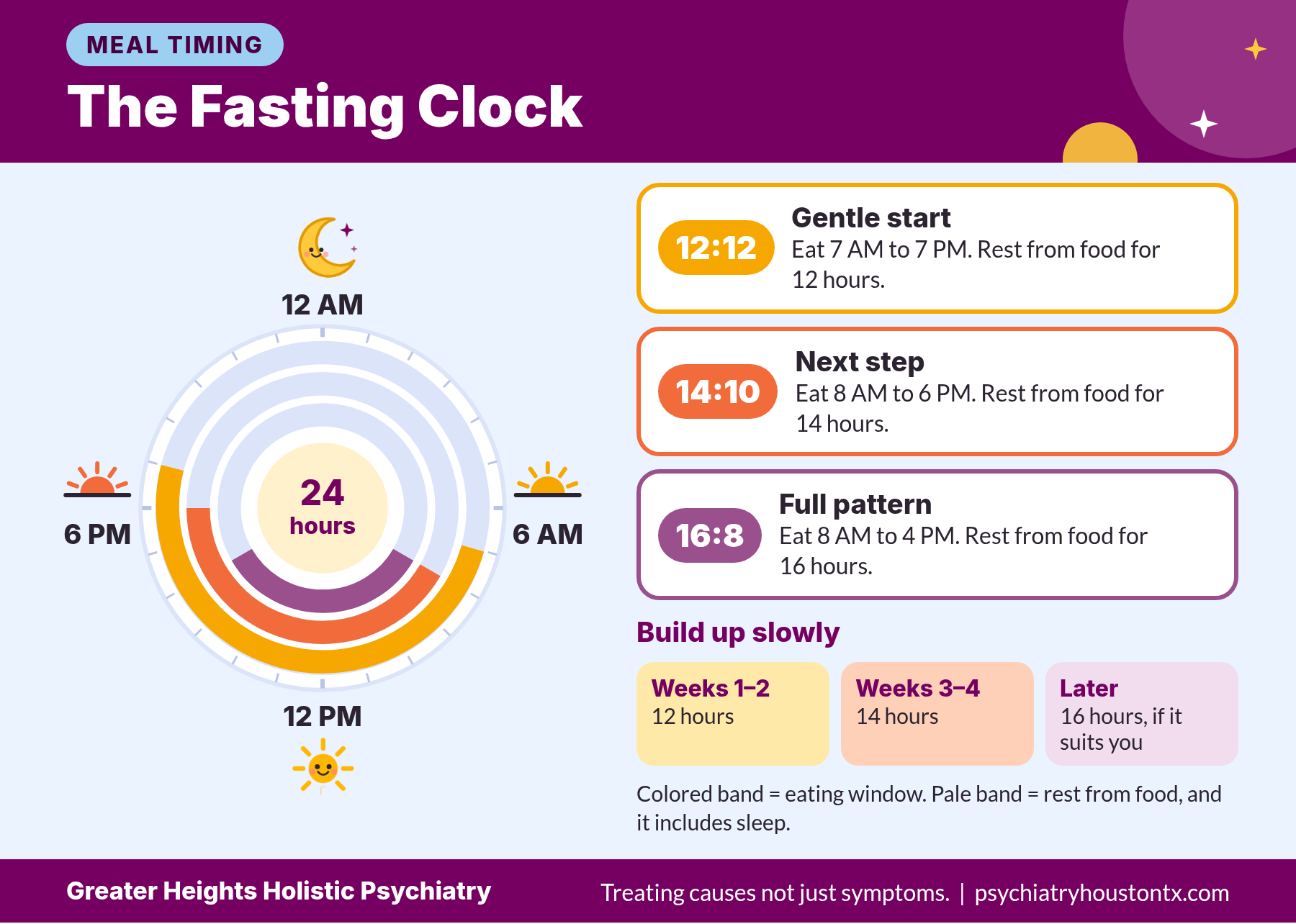
Intermittent fasting is about when you eat, not what you eat. You eat during a set window each day, such as 8 to 10 hours, and you rest from food the rest of the time, including while you sleep.
Why it may help
- It supports your body clock. In a lab study that simulated night-shift work, people who ate only during the day did not get the rise in depression-like mood (26%) and anxiety-like mood (16%) that people who ate day and night did (PNAS, 2022).
- It gives your brain a fuel switch. After hours without food, the body begins making ketones. Researchers think this switching between fuels may support brain resilience, thinking, and mood. Much of this evidence so far comes from animal studies.
- It may help with weight and metabolic health. In a 14-week trial of 90 adults with obesity, eating early in the day led to about 2 kg (roughly 5 pounds) more weight loss than eating over a window of 12 hours or longer (JAMA Internal Medicine, 2022). In a 12-week trial of 197 adults with overweight or obesity, an 8-hour eating window did not harm sleep, mood, or quality of life (JAMA Network Open, 2025).
What the studies show for mood
A review of the research found that intermittent fasting lowered depression scores a little, did not change anxiety or mood scores, and did not harm mental health in healthy adults (Systematic review, 2023). In a small study, healthy adults who fasted 18 hours a day for 50 days had less anxiety (Alpha Psychiatry, 2025). These studies are small and mostly in healthy adults. There is very little research in people with bipolar disorder or other conditions, which is why we ask you to check with us first.
How to start
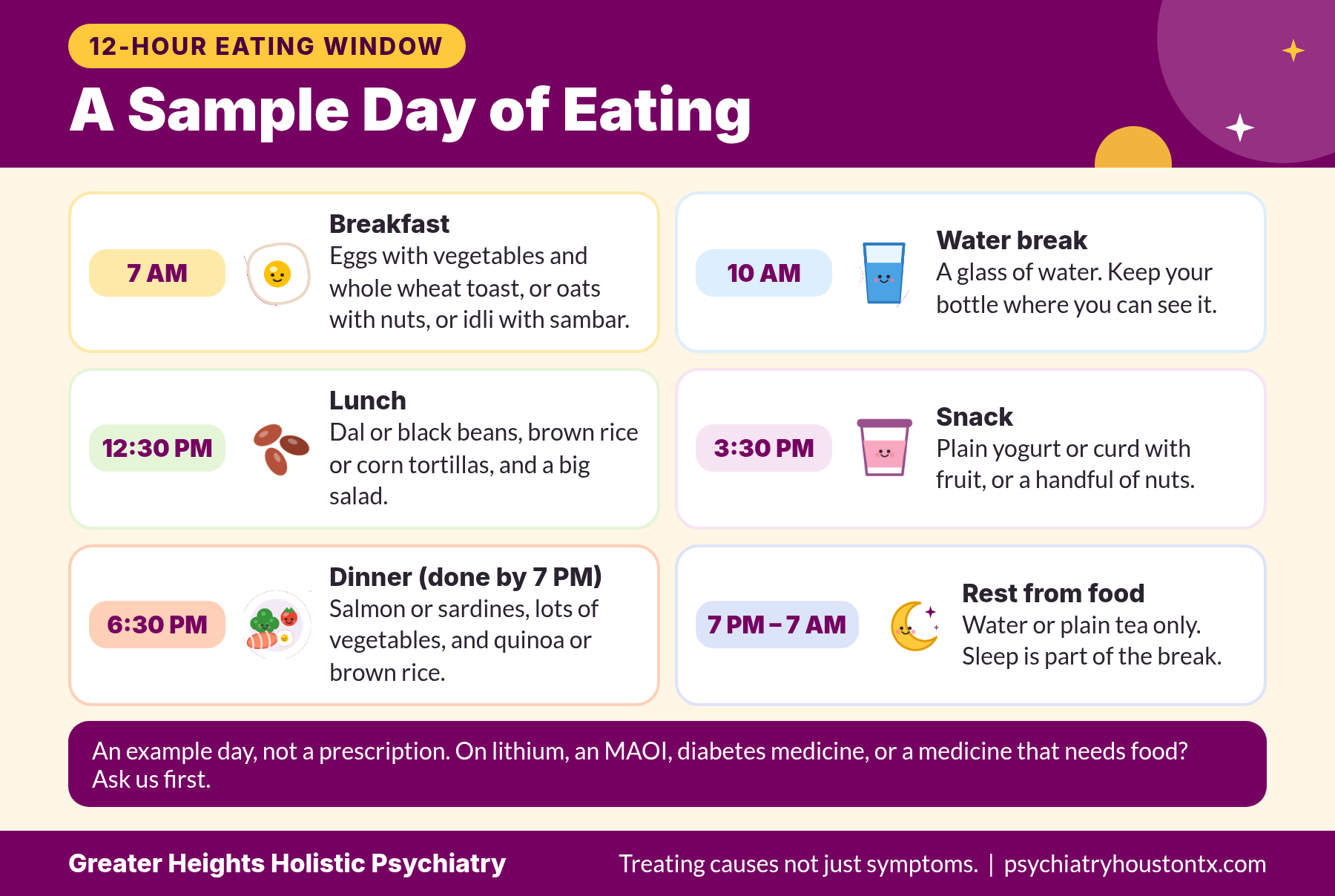
- Weeks 1 and 2: a 12-hour overnight break. For example, finish dinner by 7 PM and eat breakfast at 7 AM. Most people can do this comfortably.
- Weeks 3 and 4: stretch to 14 hours. For example, finish dinner at 6 PM and eat at 8 AM.
- Later, if it feels good: 16 hours. Many people choose an earlier window, such as 8 AM to 4 PM, because it fits the body clock best. Any window you can keep is better than a perfect one you cannot.
Tips:
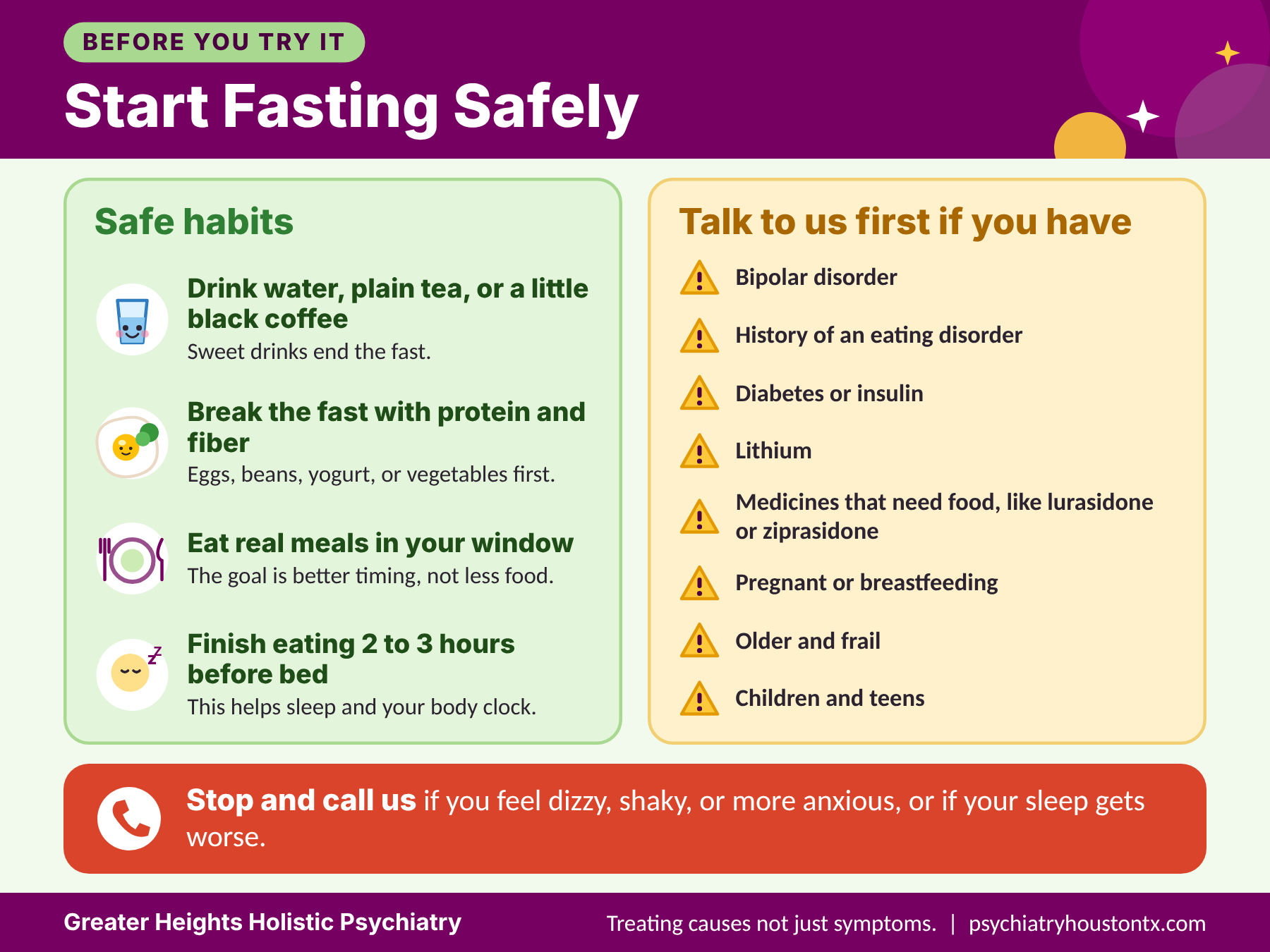
- Drink water, plain tea, or a little black coffee during your fast.
- Break your fast with protein and fiber, such as eggs with vegetables, not sweets.
- Eat real meals in your window. Fasting does not cancel out junk food, and it is not a reason to binge.
- Finish eating 2 to 3 hours before bed.
- If you feel dizzy, shaky, anxious, or you sleep poorly, stop and call us.
Talk to us first if you:
- Have bipolar disorder, an eating disorder or a history of one, or diabetes
- Take insulin or other diabetes medicines
- Take lithium, because fasting can lead to dehydration
- Take medicines that must be taken with food, such as lurasidone or ziprasidone (see the medication section below)
- Are pregnant, breastfeeding, or older and frail
- Are a child or teenager
Reviews have warned about mood swings, more anxiety, and, rarely, manic or psychotic episodes in people who are vulnerable (Nutrients, 2025). With the right guidance, though, it is a simple habit worth trying. If we agree it is safe for you, we will help you do it gently, with good food during your eating hours and plenty of water.
How diet helps depression, anxiety, ADHD, and other conditions
Every person is different. Here is a quick look at what we often discuss with patients.
- Depression. The strongest evidence. A Mediterranean-style diet, less sugar and processed food, and enough omega-3, B vitamins and protein can all support recovery alongside treatment.
- Anxiety and panic. Too much caffeine, skipped meals and dehydration can mimic or worsen anxiety. Regular meals, water and less caffeine often calm the body.
- ADHD. No diet treats ADHD on its own, and the research on specific foods is mixed. Still, protein at breakfast, fewer sugary drinks and regular meals help many children and adults focus and stay even-tempered. Some stimulant medicines also lower appetite, so planned meals and snacks matter.
- Bipolar disorder. A steady routine of meals, sleep and activity is very protective. Limit alcohol and caffeine, and keep salt and fluids steady if you take lithium.
- Sleep problems. Avoid caffeine after noon, skip big late meals and limit alcohol. A light snack with protein and a little carbohydrate can help some people.
- Weight gain from medicines. Some psychiatric medicines raise appetite. Planning meals, choosing high-fiber foods and drinking water can make a real difference.
- Children and teens. Their growing brains need regular, balanced meals. See our article on junk food and your child's mental health.
Food and medication: getting the best results from your psychiatric medicine
Food and medicine work together. A few things to know:
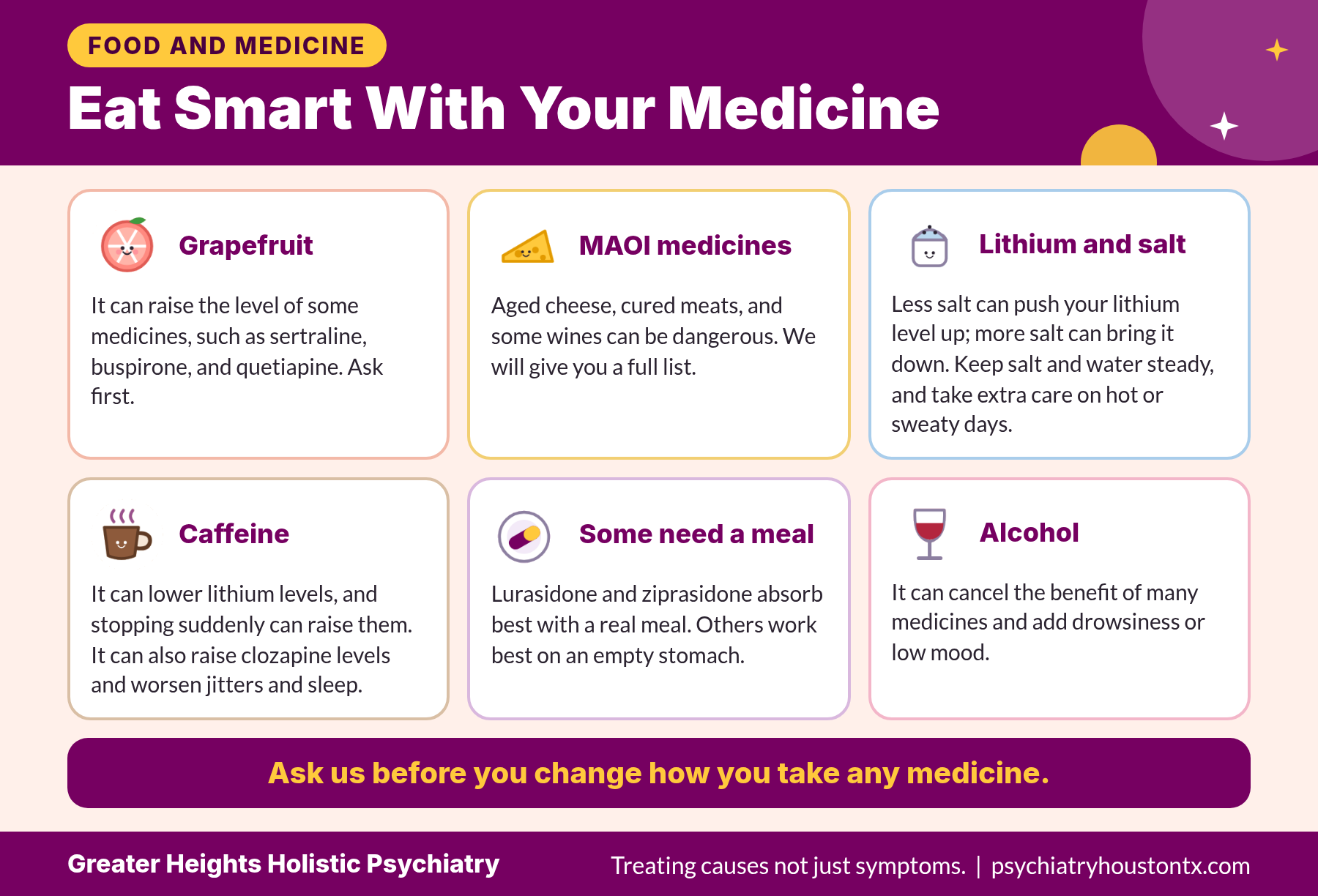
- Grapefruit and grapefruit juice can raise the level of some medicines (such as sertraline, buspirone, quetiapine and others) in your body. Ask before you enjoy it (MDedge).
- MAOI medicines (like phenelzine) require avoiding foods high in tyramine, such as aged cheese, aged or cured meats and some wines. Mixing them can be dangerous. We will give you a full list if you take one.
- Lithium and salt. Eating much less salt than usual can push your lithium level up, and much more salt can bring it down. Keep your salt and water intake steady, and be careful on very hot or sweaty days.
- Caffeine can lower lithium levels, and cutting back suddenly can raise them, so tell us before you change how much coffee or tea you drink. It can also raise levels of some medicines like clozapine, and worsen jitters and poor sleep with stimulants.
- Some medicines need food. For example, lurasidone and ziprasidone are absorbed much better with a meal of enough calories (Primary Care Companion, 2023). Others work better on an empty stomach.
- Alcohol can cancel out the benefit of many medicines and add drowsiness or low mood.
If you are getting TMS or SPRAVATO, follow our instructions about eating and drinking before your visit. Also, our pharmacogenetic testing can help us see how your body is likely to process certain medicines, which can guide both dosing and diet advice.
Putting it all together: diet plus a healthy lifestyle
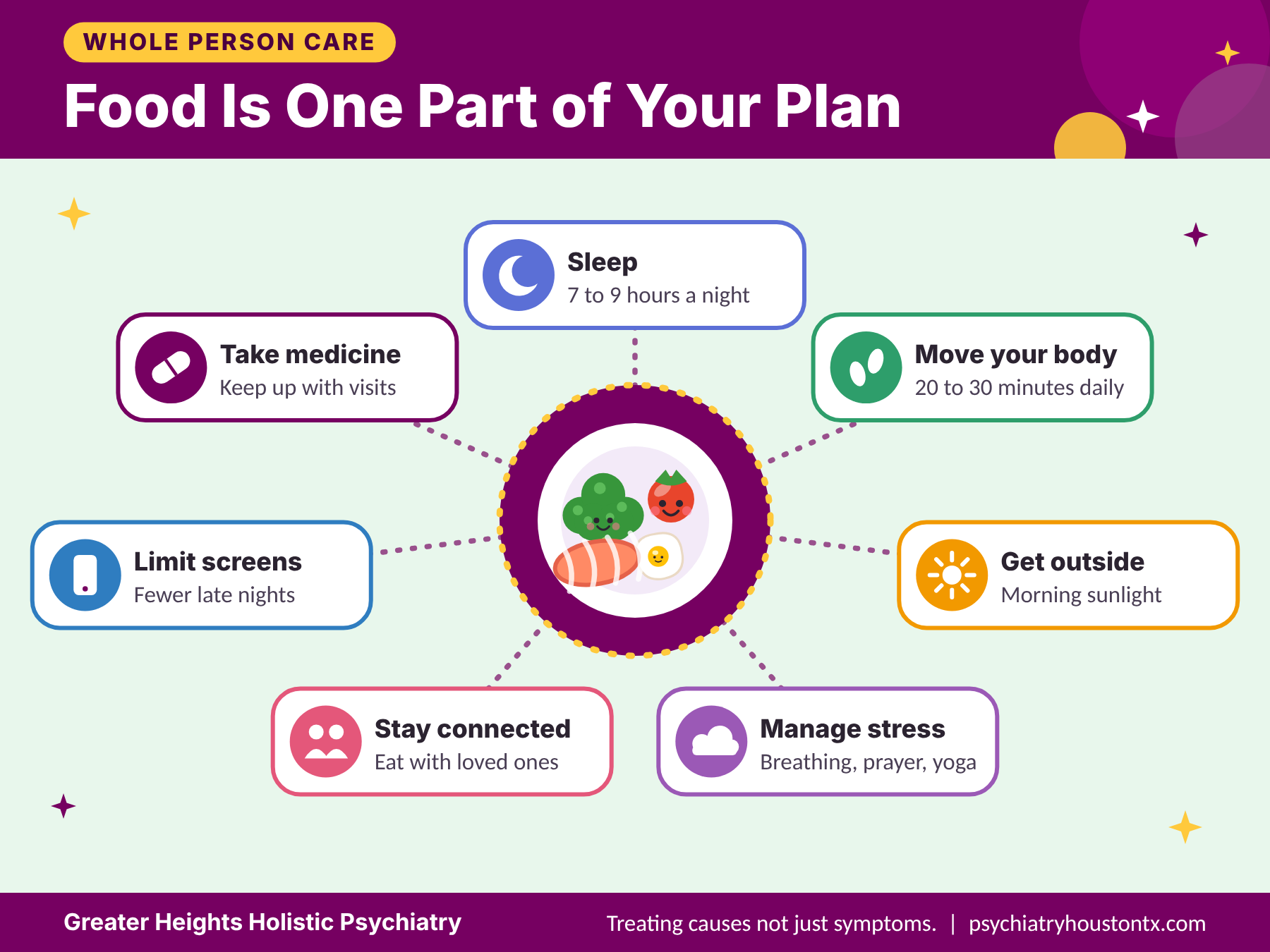
The best results come when food is one part of a whole-person plan. This is the heart of our holistic approach.
- Sleep. Aim for 7 to 9 hours at regular times. Good sleep makes healthy eating easier.
- Move your body. Even a 20- to 30-minute daily walk lifts mood and helps your appetite and sleep.
- Get outside. Morning sunlight supports your body clock and your mood.
- Manage stress. Deep breathing, prayer, meditation, yoga or time with loved ones all help.
- Stay connected. Eat with family or friends when you can. It improves both the food and the mood.
- Limit screens and late nights. They disturb sleep and invite mindless snacking.
- Take your medicine as prescribed and keep up with therapy and follow-up visits.
Simple ways to get started this week
You do not have to change everything at once. Pick one or two of these:
- Swap one sugary drink a day for water.
- Add one vegetable or fruit to every meal.
- Eat breakfast with some protein.
- Stop caffeine after noon.
- Keep a water bottle where you can see it.
- Cook one extra home meal a week.
- Add fish, beans or nuts to your grocery list.
Small steps add up. Give each change two to three weeks before adding the next. Be kind to yourself, since slips are part of the process.
When to seek help
Healthy eating supports mental health, but it is not a replacement for care. Please reach out if you notice:
- Sadness, worry or irritability that lasts more than two weeks
- Big changes in sleep, appetite or weight
- Trouble functioning at work, school or home
- Strong urges to restrict food, binge or purge
- Any thoughts of hopelessness or self-harm
We are not a crisis service. If you are in crisis or thinking about harming yourself, call or text 988, call 911, or go to the nearest emergency room.
Frequently asked questions about diet and mental health
Can diet help with depression and anxiety?
Diet can support treatment, but it does not replace medication or therapy. In the SMILES trial of 67 adults with moderate to severe depression, 32% of those who received dietitian support for a Mediterranean-style diet reached remission after 12 weeks, compared with 8% in the comparison group. Most were also getting their usual care. For anxiety, regular meals, enough water, and less caffeine often calm the body.
What is the best diet for mental health?
Any balanced diet is good, but the traditional Mediterranean style of eating has the most direct evidence behind it. It centers on vegetables, fruits, beans, whole grains, fish, nuts, and olive oil, with less processed food and sugar.
What foods are bad for mental health?
Ultra-processed foods, sugary drinks, hidden sugar in foods that seem healthy, alcohol, late-night snacking, and caffeine after noon are the main ones to limit. Most of this research shows links, not proof, so think of these as habits that support your care.
How much water should I drink for my mood?
A simple starting point for adults is your weight in pounds divided by 20, which gives your cups of drinks a day. For example, 160 pounds is about 8 cups. Children and teens go by age: about 5 cups for ages 4 to 8, 7 to 8 cups for ages 9 to 13, and 8 to 11 cups for ages 14 to 18. If you take lithium or an SSRI, or have kidney or heart problems, ask us how much is right for you.
Do serotonin-rich foods work like an antidepressant?
No. Foods rich in tryptophan, such as eggs, salmon, turkey, tofu, nuts, seeds, and oats, will not act like a medication, and one meal will not change your mood. Eaten day after day, they may help support recovery and help protect against low mood returning.
Is intermittent fasting safe for people with depression or anxiety?
Research so far is small and mostly in healthy adults. One review found that intermittent fasting lowered depression scores a little and did not harm mental health in healthy adults. There is very little research in people with bipolar disorder, and reviews have warned about mood swings and anxiety in vulnerable people. Talk to us first if you have bipolar disorder, an eating disorder or a history of one, diabetes, or take lithium.
Can food change how my psychiatric medicine works?
Yes. Grapefruit can raise the level of some medicines. MAOI medicines require avoiding foods high in tyramine, such as aged cheese and cured meats. Less salt can push your lithium level up and more salt can bring it down, so keep your salt and water steady. Caffeine and alcohol can affect several medicines, and some medicines, such as lurasidone and ziprasidone, absorb best with a meal.
What is nutritional psychiatry?
Nutritional psychiatry looks at how food, water, and eating habits affect mood and mental health. At our clinic, it is one part of a whole-person plan, alongside medication, therapy, and lifestyle care. It does not replace treatment.
What foods help with anxiety?
No single food treats anxiety. Regular meals with protein and fiber keep blood sugar steady, enough water helps, and cutting back on caffeine and alcohol often calms the body. Talk to us before you change caffeine if you take lithium.
Can dehydration cause anxiety or low mood?
Even mild dehydration can bring on tiredness, headaches, trouble focusing, and a lower mood. Drinking enough through the day is an easy habit that supports your care.
Does Greater Heights Holistic Psychiatry offer dietary education?
Yes. Dietary education and lifestyle counseling are part of our whole-person care, along with medication management, therapy, micronutrient testing and supplement guidance, pharmacogenetic testing, TMS, and SPRAVATO. We see patients ages 6 to 75 in person at our Heights, Cypress, and Nasa Parkway offices, or by telehealth from anywhere in Texas. Call (832) 930-1202 to check your insurance and book.
"GHHP is a wonderful practice that encourages the alignment of mind, body, and spirit."C.C., Google review (already shown on our homepage)
Dietary education and counseling in Houston: we are here to help
At Greater Heights Holistic Psychiatry, our approach is simple: Treating causes not just symptoms. We take the time to listen, look at the whole person, and build a plan around your life. That includes medication management, therapy, lifestyle counseling, dietary education, micronutrient testing and supplement guidance, and pharmacogenetic testing, plus TMS and SPRAVATO when medication alone hasn't worked. If you want help building an eating plan that fits you, your culture, and your medicines, we would be glad to guide you.
We see patients ages 6 to 75. Visit us in person at our Heights, Cypress, or Nasa Parkway office, or see us by telehealth from anywhere in Texas.
Insurance network status may change without advance notice. Please call (832) 930-1202 to verify your insurance benefits before your visit.
This information is educational and is not medical advice. Talk with your provider about your care. Always talk to your doctor before making big changes to your diet, fasting, or supplements, especially if you take medication.
Sources and references
- How diet affects mental health: what's the evidence?, European College of Neuropsychopharmacology, via EurekAlert
- A randomised controlled trial of dietary improvement for adults with major depression (the 'SMILES' trial), BMC Medicine, 2017
- Does intermittent fasting impact mental disorders? A systematic review with meta-analysis
- Effects of Intermittent Fasting on Anxiety and the Functional Connectivity of the Amygdala in Healthy Adults, Alpha Psychiatry, 2025
- Psychological and Psychiatric Effects of Prolonged and Intermittent Fasting, Nutrients, 2025
- Effects of changes in water intake on mood of high and low drinkers, PLoS ONE, 2014
- Mild dehydration affects mood in healthy young women, Journal of Nutrition, 2012
- Drinking plain water is associated with decreased risk of depression and anxiety in adults, World Journal of Psychiatry, 2018
- Dietary Reference Intakes for Water, Potassium, Sodium, Chloride, and Sulfate: Water, National Academies, 2005
- Hyponatremia associated with selective serotonin-reuptake inhibitors in older adults, Annals of Pharmacotherapy, 2006
- American Gut: an open platform for citizen science microbiome research, mSystems, 2018
- Gut-microbiota-targeted diets modulate human immune status, Cell, 2021
- Ultra-Processed Food Consumption and Mental Health: A Systematic Review and Meta-Analysis of Observational Studies, Nutrients, 2022
- Daytime eating prevents mood vulnerability in night work, PNAS, 2022
- Effectiveness of Early Time-Restricted Eating for Weight Loss, Fat Loss, and Cardiometabolic Health in Adults With Obesity, JAMA Internal Medicine, 2022
- Time-Restricted Eating and Sleep, Mood, and Quality of Life in Adults With Overweight or Obesity, JAMA Network Open, 2025
- Foods that could boost your serotonin, Healthline
- Influence of Tryptophan and Serotonin on Mood and Cognition with a Possible Role of the Gut-Brain Axis, Nutrients, 2016
- Caution patients about common food-drug interactions, MDedge
- The Ofttimes Overlooked Food-Drug Interactions in Psychopharmacotherapy, Primary Care Companion for CNS Disorders, 2023